Designing for freedom: an interview with Studio Rabbit
Inge knew she wanted to make things from the age of twelve, when she was filling notebooks with drawings. She studied fashion at ArtEZ in Arnhem, then spent nine years at G-Star Raw, the first four or five as what she describes as a paradise; working in the atelier for the shows in NY and making samples and objects for shop windows and big events. They were allowed to be incredibly creative.
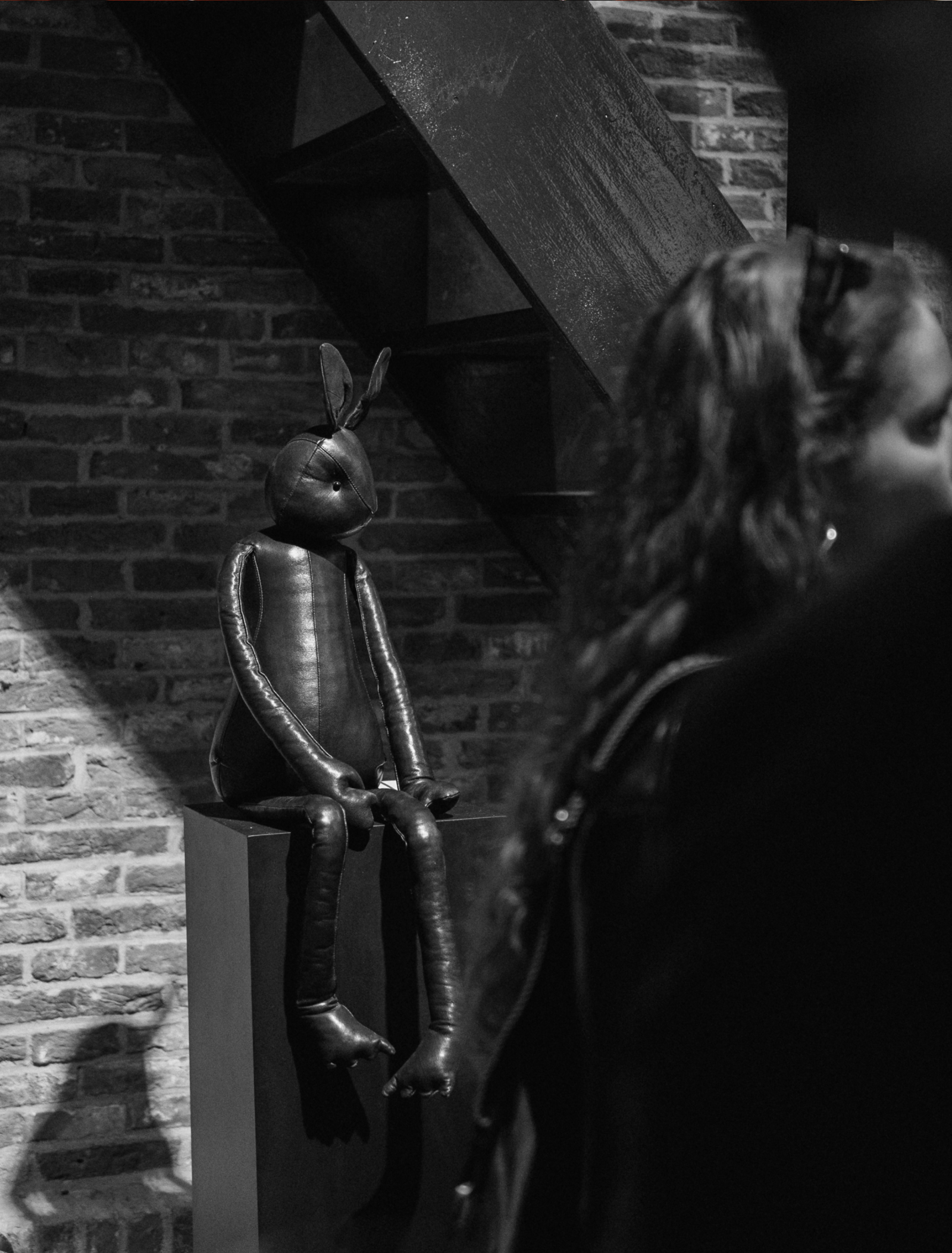
For much of that time she has worked for Ronald van der Kemp, whose haute couture shows in Paris gave her a view of what fashion can be when it refuses to follow the seasonal calendar. The two worlds run in parallel: client work that keeps her connected to the industry; Studio Rabbit, which keeps her connected to herself. The rabbit was always in her (her surname in Dutch translated), but also a leather hare she made as a kind of personal signature, which ended up on the catwalk in Paris and became an icon.
'Attention makes something so much more valuable. I find it beautiful to give something your full attention, and that is why it comes out the way it does.'
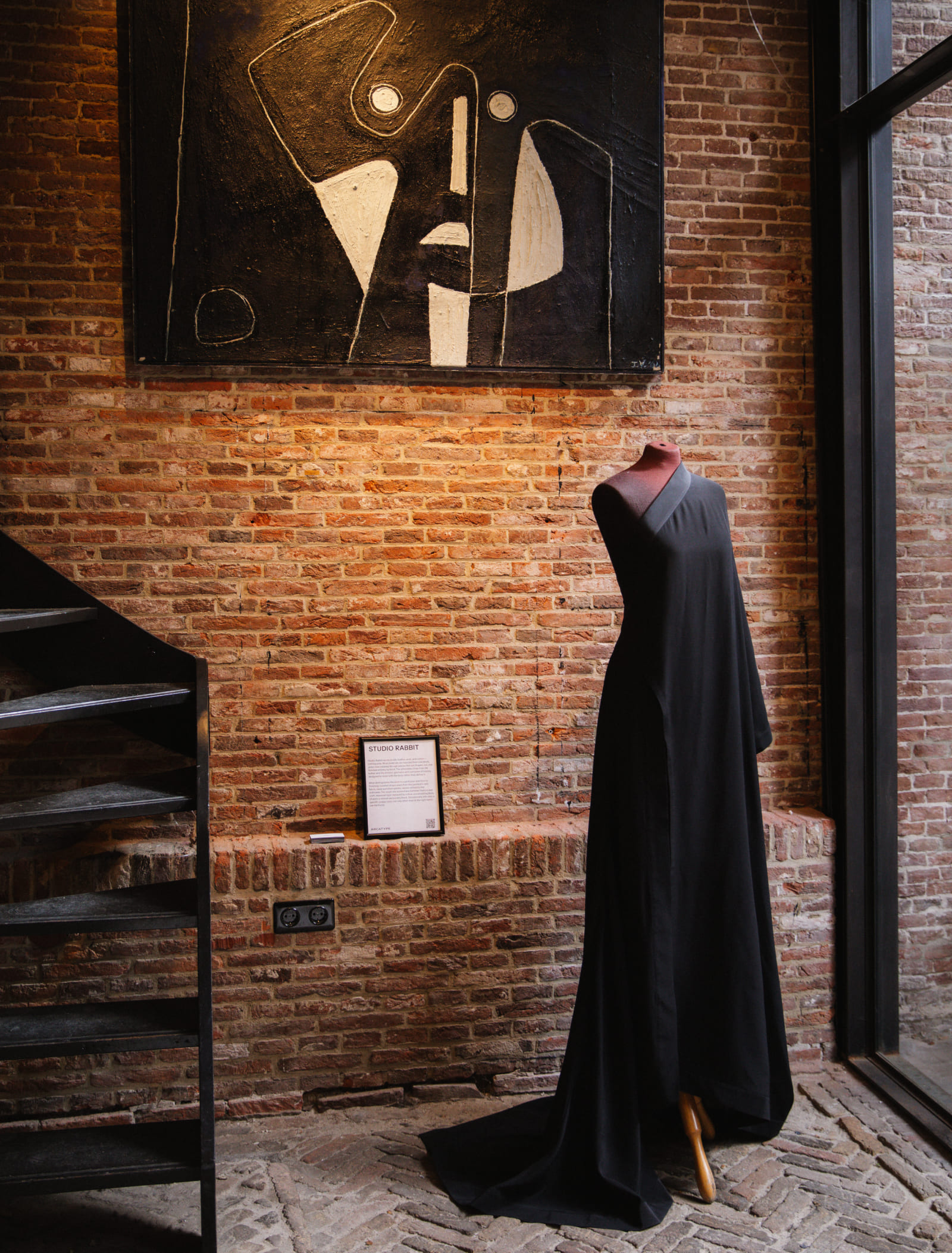
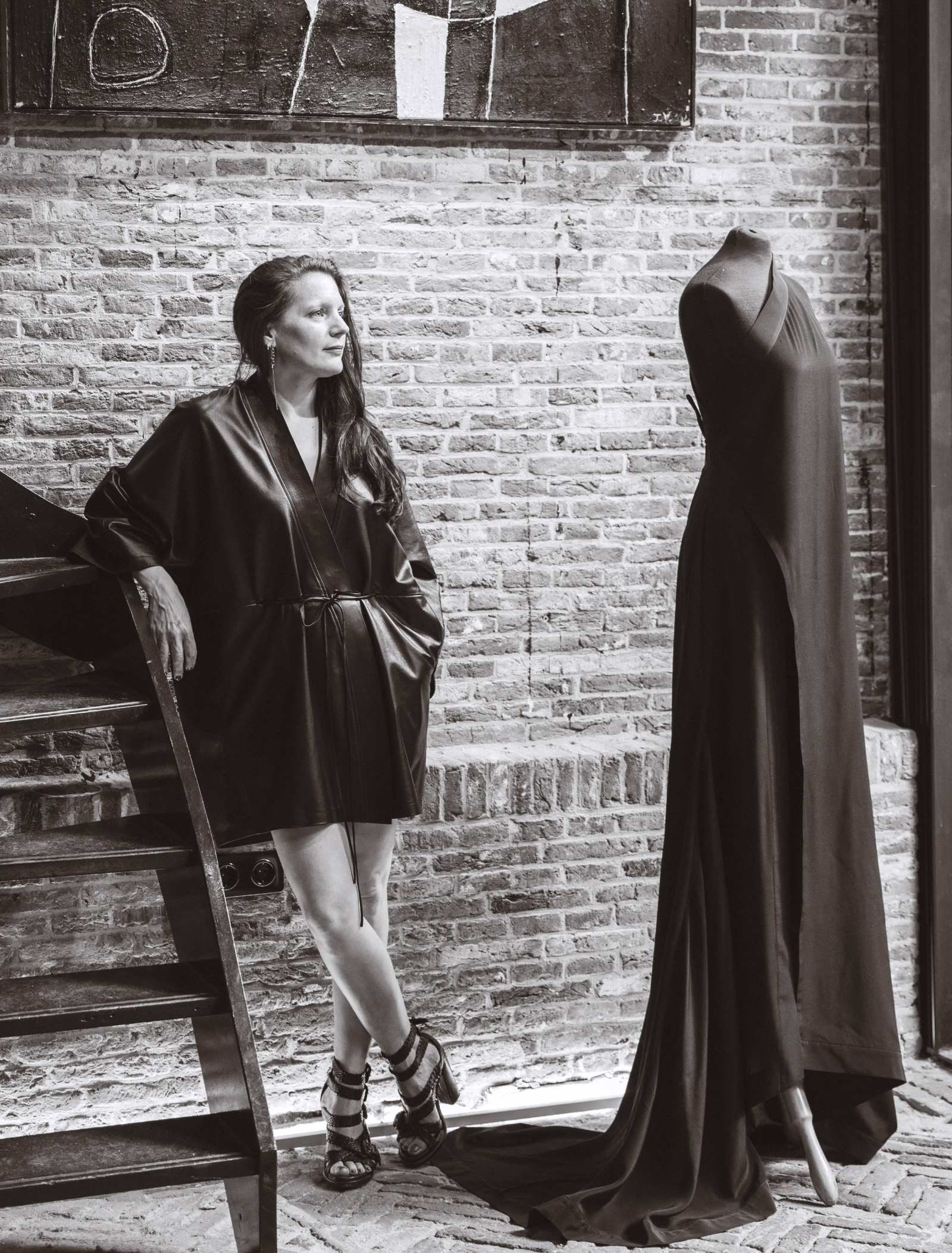
The turning point for Studio Rabbit as a proper collection came through a kaftan. Inge had owned one she liked but found not good enough, not enough thought had gone into it, she says. She made her own version in silk, longer, with a deeper V, a back detail, a strap made from the same fabric cut and finished by hand.
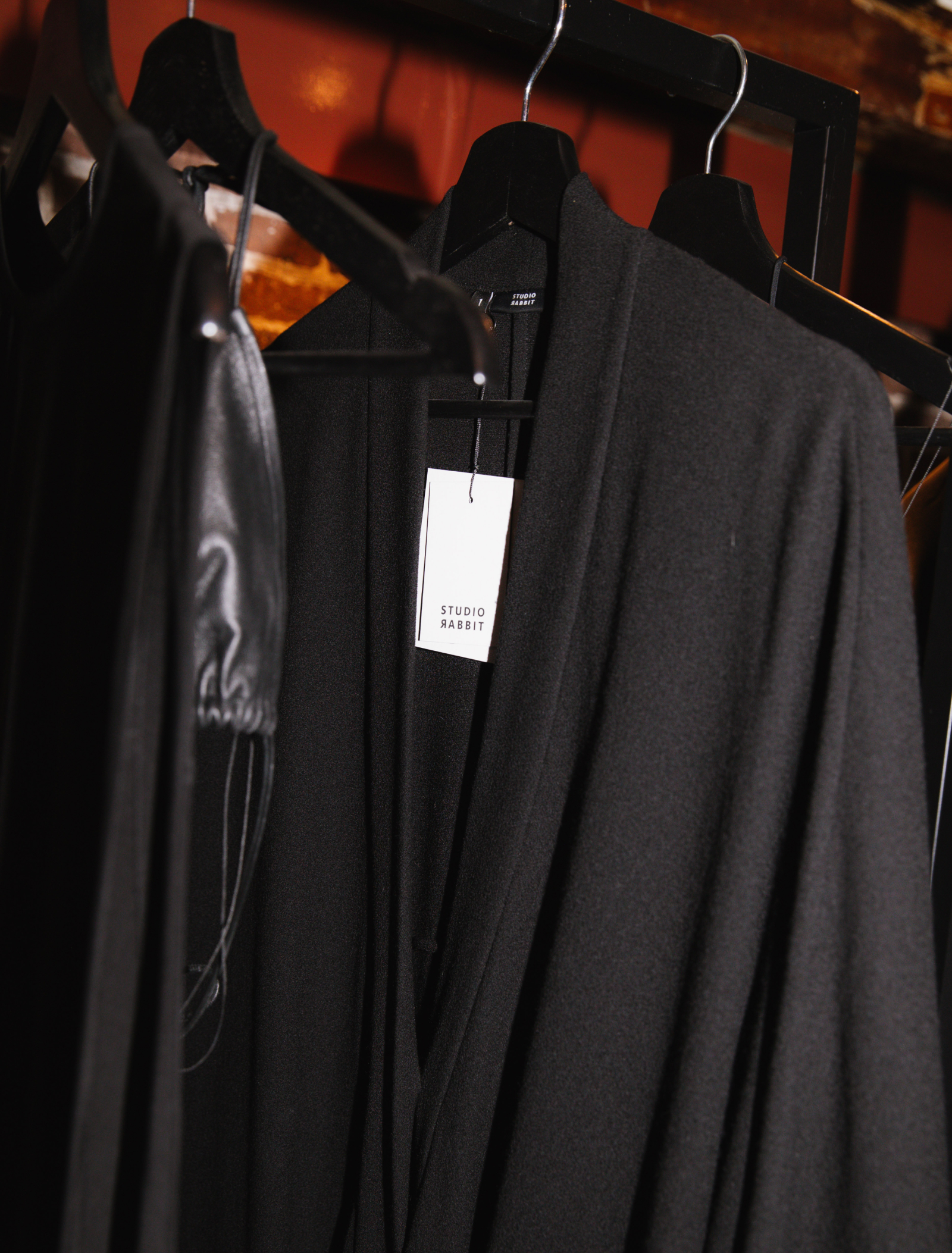
Studio Rabbit works in silk, leather, and occasionally wool and cotton. The decision is not provisional, it is the work. Inge will not use polyester. She has considered it: the prices for natural materials have become genuinely difficult, and nothing is without complexity. But the materials she uses are at minimum biodegradable, and more importantly, they are the most beautiful. That is the reason, and it is sufficient.
The silk she uses is crêpe de chine, soft, with a movement she describes as fluttering. She is considering adding crêpe georgette, which is slightly heavier. Satin she rules out: too shiny. Transparent silk she is still thinking about. The palette is almost entirely black, with occasional precise colour, a specific shade that has to carry a specific atmosphere. If it does not, it does not appear.
'I give myself a framework [silk, leather, wool] and within that there is already so much to discover. That is enough.'
The leather dress she loves the most at the moment started as something else entirely. She had made a different leather piece, liked it but found it too complicated, and began again. The new version needed to be more like a jacket, more like a kimono. She wanted the body of it soft, but the collar band firm, so she bonded it, creating a deliberate contrast between hardness and drape. Volume at the back. A strap finished through a hand-made eyelet. It falls slightly backward when worn, which gives it the volume she was looking for. She is not always sure how she arrives at these things. Sometimes, she says, it is a mystery to herself too.
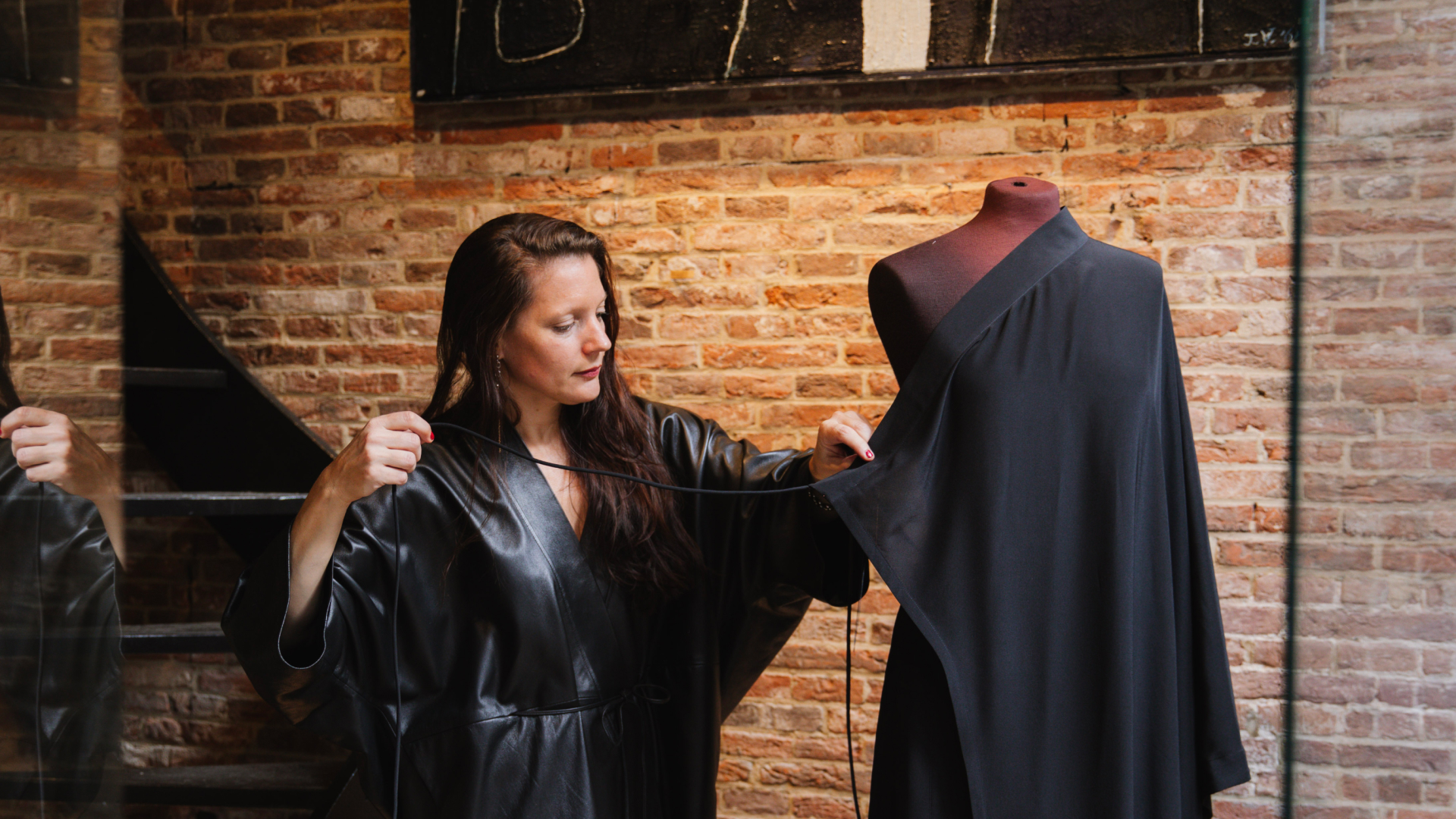
Inge works by draping, cutting lengths of fabric and pinning them directly onto the dress form until she finds something she likes. Then she sews it loosely, adjusts, unpins, re-drapes. Eventually she makes a pattern, which she describes as the part most people do not think about when they imagine clothing being made. Pattern-making is mathematical. It is the translation from a three-dimensional form back into flat paper, and it has to be precise if the garment is going to be reproducible. She does all of it herself.
The finishing is the part she refuses to rush. A beautifully stitched seam, she says — even one that will never be seen by the person wearing the garment — is something she notices. Someone without her training might not identify it exactly, but they will sense that more thought went into it. The straps on her silk kaftan are made from self-fabric, folded and finished by hand. She looked for a machine that could do it. She could not find one. She works with a partner in Ukraine who produces some pieces for her. She will stop the work and ask for a seam to be redone if the stitch length is wrong, even slightly. This is not perfectionism for its own sake.
It is consistency. The detail is the product.
The tension between slow work and a fast industry is something Inge has thought about carefully. Her answer is partly structural: as a small label, no one is asking her to produce a new collection every quarter. She is not inside the machine that demands it. But she also believes the argument for slowness is getting easier to make. The concept stores she wants to work with, the kind that think carefully about what they carry and why, are increasingly looking for independent labels that stand for something. Presence among them is, as she puts it, good PR for the store too.
The economic reality is harder. Making a garment in small quantities from natural materials, finished by hand, costs what it costs. The price is what it is. Inge is direct about this: she has a mortgage. People sometimes see fashion as glamorous work done by people who do not need to earn. The gap between that image and the actual economics of independent making is one of the things she would like people to understand. So she is trying something different. Alongside direct sales, she is offering a new rental model. You can choose to wear one of her pieces for a week or a specific event, for a set fee. Then choose to return it, or keep it. It is a quiet shift in thinking: from ownership to experience, from transaction to an ongoing relationship. The value of what she has made stays intact. It just finds more ways to be lived in.
She keeps her Saturday studio open from one to six every week, not because it is dramatically busy, but because it lowers the threshold. No appointment necessary. People can come, handle the fabric, ask questions, have a conversation about something else entirely. Some will buy eventually. That is not, she is careful to say, the main focus. She wants to make beautiful things. If someone wants to take one home, that is wonderful. But the making comes first.
I want to make the world a little more beautiful. A little more enjoyable. I want to believe in fairy tales, and I think the world really is wonderful.
The dream Inge describes most clearly is a large concept space. Not a shop in the conventional sense, but a curated world. Her own work would occupy part of it. Around it: ceramics, objects, things made by other people she trusts and admires. The space would travel: a base in Amsterdam, pop-ups in Paris and Milan, events that bring her world into contact with others. She is inspired by a memory from an experience she had in Antwerp with Walter van Beirendonck, whose studio had a garage door that opened onto the street and felt like a playground. This is the type of environment she is working toward. It doesn't have to be retail, or high end, it can be anything if you put your imagination to it.
The designers she admires most are the ones who build entire worlds rather than just collections: Ann Demeulemeester, Saint Laurent, Walter van Beirendonck, Bas Kosters. What they share, in her reading, is freedom, freedom from the expectation that fashion has to look a particular way, serve a particular market, or justify itself in commercial terms. That word, freedom, runs through everything she says. It is why she left a salaried job. It is why she refuses polyester. It is why she would rather give things away for free than see them hanging in a department store rail between things that do not belong near them.
Studio Rabbit was one of the first ateliers that was featured at Arcatype's Edition 001, in Amsterdam in April 2026. We hope by highlighting the philosophy and the work of designers like Inge, that it will inspire a new generation of creative, who progress the industry forward by creating their own path. If you know of other designers, studios and talent that deserves a light, don't be shy to get in touch.