


How to design and grow a responsible apparel brand in 2026
Responsibility is no longer defined by a recycled fabric blend or a certification badge. In 2026, a responsible apparel brand demonstrates values across the whole business canvas. From durable materials to experienced construction techniques to communicating transparent supply chains. These elements not only reinforce fiscal stability but can now offer carefully calculated production estimations.
Consumers are also shifting. Moving away from adopting every fleeting micro-trend, they are connecting with broader vibes – these cohesive aesthetics, values, and identities that offer long-term self-expression aligned to their core interests. This also ties back into responsibility: it's not just about the claims, but how design ethics contribute to the whole picture. A brand that collapses after three seasons due to inability to perform across these factors is not responsible, even if its fabrics were organic.
At Arcatype we are building a new framework where responsibility is defined by a balance of 3 equal parts, not just one on its own:
- Craft: products designed and constructed to endure
- Character: a design language that remains chosen beyond just a moment
- Care: value created without hidden harm environmental, social, or financial
By building new framework & collecting insights across the market, it helps brands identify opportunities to improve across these three pillars in their strategy.

Return to Craft:
Building a supply chain you can defend
Nearshoring apparel production to Europe, or neighbouring regions like North Africa and Turkey, has become a dominant strategy for brands seeking to escape the volatility of long-distance sourcing. Key drivers include faster lead times, reduced transport footprint, and meaningful insulation from tariff risk. With US tariffs having redrawn global trade maps in 2025 & 2026, brands that built long-distance supply chains are now absorbing the consequences; those who nearshored are not.
"Over the next five years, apparel companies expect to continue increasing their share of deeper relationships to 51 percent, a must-do strategy to keep pace with sustainability regulations and speed requirements." — McKinsey & Company
With Digital Product Passports (DPP) and new transparency regulations rolling across Europe, the region is leading the global transition to ethical production. The EU accounted for 35.5% of the world's apparel and textile imports by value in 2022, making it the most consequential market for any brand building with integrity.

Owning Character:
Design for longevity not trend
Many apparel brands fail because they chase relevance instead of building it. In 2026, trend-driven velocity is increasingly expensive. Production minimums, marketing costs, and inventory risk make rapid cycles financially dangerous.
By doubling down on signature hero products, brands can compound recognition over time. Rather than seasonal reinvention, the discipline lies in iterative refinement; revisiting an existing form in a cleaner material, a better construction, a more considered detail. The product gets quieter and stronger at once.
Building production literacy means knowing your materials and your partners:
- Natural fibres with durability and certifications (IWS, Tencel, GOTS cotton)
- Proven mills and supply partners with shared values
- Modular construction techniques that allow for repair and adaptation over time
There is also a protection argument here.
The brands that get copied most easily are those whose aesthetics are distinctive but whose construction is not. A fast-fashion factory can replicate a silhouette but cannot replicate the drape of a carefully chosen fabric, the finish of considered hardware, or the way something moves after three years of wear. Depth of craft is ultimately dupe-proof in a way that surface aesthetics never will be.
Consumers in Europe are increasingly interested in durability and repairability; especially as new regulatory frameworks encourage product transparency and lifecycle accountability. Longevity reduces returns, increases repeat purchase behaviour, and builds the kind of trust that compounds quietly over years.
Full-Circle Care:
Resale presence means everything today
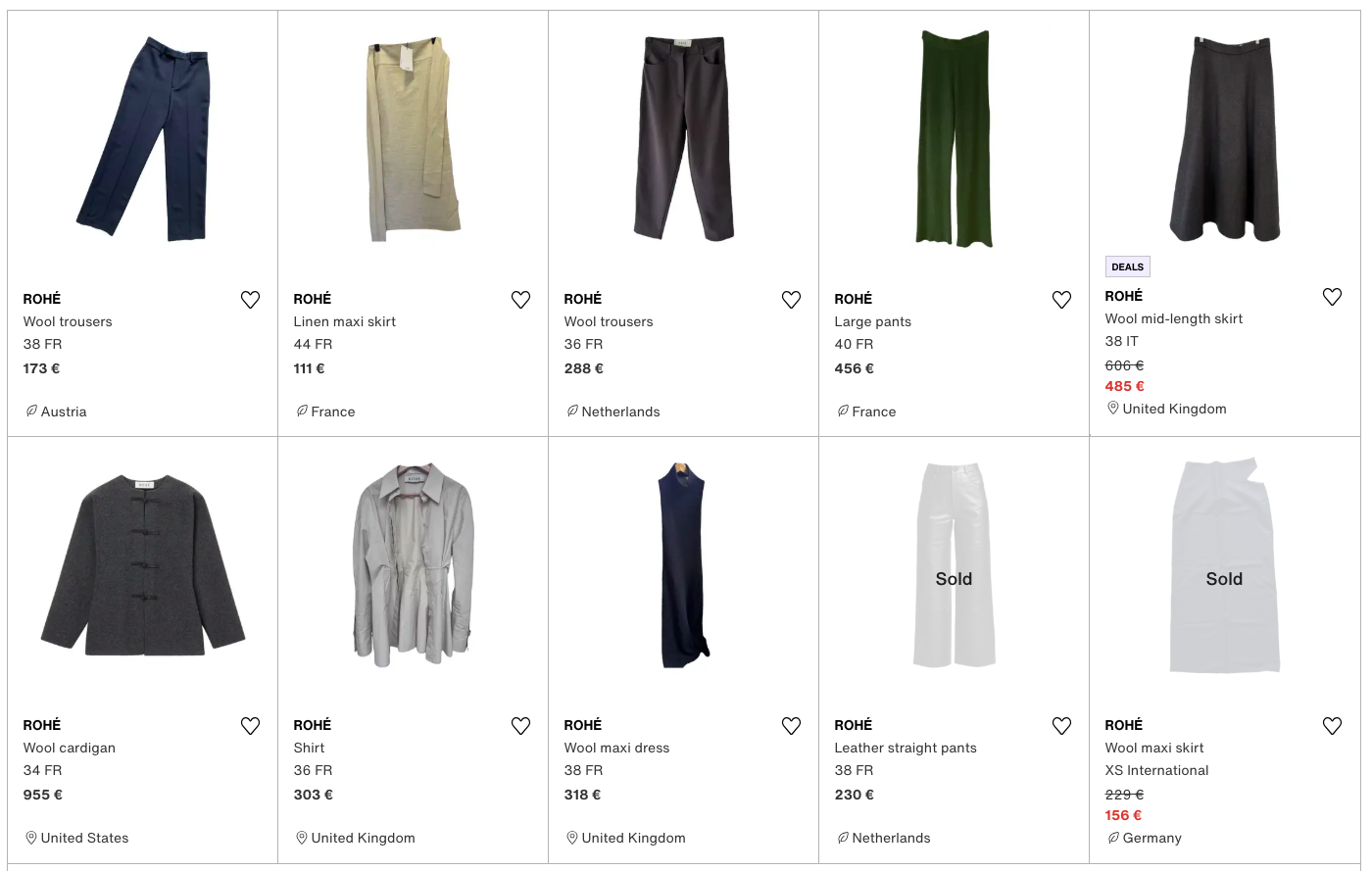
The secondary market is no longer a footnote. Resale is growing two to three times faster than first-hand fashion, and increasingly, it is where your brand's durability thesis gets tested in public.
Brands whose products hold their value on Vinted, Vestiaire, or Depop are earning a form of third-party validation that no advertising budget can replicate. A ten-year-old piece that still commands a strong resale price is proof that you built something worth building. It arrives in conversations you weren't part of. It appears in wardrobes you never marketed to.
This is worth tracking actively, not just as a signal of brand health, but as a story to tell. If your products age beautifully and hold their value, say so. Show the evidence.
Key Points:
1. The importance of sustainable finance
The brands with the most considered values and the finest products are often the ones that run out of money first. Financial discipline is not in tension with responsible brand-building. It is a precondition for it. The most resilient brands treat inventory management with rigorous discipline. Overproduction is a values failure as much as a financial one; excess stock means wasted materials, discounting, and a weakened sense of scarcity. A useful rule of thumb: if you think you'll sell 100 of something, order 90. It does not generate the fastest growth, but it is a profitable and responsible way of doing business.
Cash flow visibility matters more than almost any other metric. Aim for at least a one-month cash buffer at all times, and maintain a rolling 13-week forecast so you can see problems before they arrive rather than after. In a market subject to tariff shocks, oil price volatility, and shifting consumer confidence, the brands that act before a crisis hit are the ones that survive it. Avoid discount dependency with equal conviction. Flash sales train customers to wait. They also signal that your pricing wasn't honest in the first place. If you find yourself discounting to clear stock regularly, the problem is upstream, in the volume you ordered, not the price you set.
2. Where you sell is also branding.
The temptation for early-stage brands is to pursue wholesale at scale is like honey for a bee. To get into as many doors as possible, as quickly as possible, is almost always the wrong move. The traditional wholesale model carries real financial risk for independent brands. Payment terms can stretch to 90 days or longer, or two years in the Saks case. Large accounts can strain your cash flow even when they go well, and leave you exposed if they don't. The solution? Reserve your hero products for your own site. Keep wholesale assortments lean. Use prestigious boutique relationships to build credibility and reach new audiences, not to move bulk inventory.
The most productive wholesale relationships in 2026 are with independent boutiques whose owners are also their buyers: people with a genuine point of view, who understand what they stock and can communicate it to their customers. These relationships are worth more than a placement in a large platform that will discount your work alongside everything else it carries.
At the same time, build direct channels with real discipline. An email list remains the most durable marketing asset a brand can hold, it is not subject to algorithm changes, reach suppression, or platform fees. SEO and GEO (generative engine optimisation) are increasingly valuable for brands publishing useful, specific content. A well-written guide to garment care or fibre sourcing can bring in readers, future customers, for years to come.

3. Grow Depth, Not Volume
The temptation in early-stage brand building is to chase reach: more followers, more SKUs, more markets. But growth built on volume is fragile. Start by identifying the smallest viable audience, the people for whom your work is most precisely made. Design for them, and with their feedback. A niche community of 2,000 deeply engaged customers is worth more than a passive audience of 50,000. Your clients increasingly want to understand the thinking behind how and why you design the way you do, not just the object itself. In a market saturated with product, your uniqueness becomes your point of difference.
In-person connection matters more now than it has in a decade. Trunk shows, community events, and intimate retail experiences are not nostalgia, they are among the most effective acquisition channels available to an independent brand right now. The people who find you in a considered setting tend to stay.

4. Earn Trust, Don't Signal It
The vocabulary of sustainability has been so thoroughly co-opted by marketing that most consumers no longer believe it. "Conscious," "eco-friendly," "sustainable" – these words have been repeated so many times, attached to so many products of questionable quality, that they now function as noise.
The way forward is not to say you are trustworthy. It is to behave in ways that make trust inevitable. Show process, not slogans. Share the factory. Profile your atelier talent. Photograph the hardware. These disclosures may feel exposing, but they are the basis of genuine credibility. Customers who understand how something is made are customers who understand why it costs what it costs.
Let the product do the talking. A well-made piece that ages beautifully is the strongest argument a brand can make today. It is also the argument that arrives in the secondary market — where the durability of your work is tested publicly and permanently.
Common Mistakes Responsible Apparel Brands Make
Most of the patterns that cause responsible brands to stumble are not about intent. They are about sequencing.
Expanding too quickly is the most common. A brand with one strong product and a loyal early audience starts to feel pressure — from investors, from opportunity, from comparison with faster-moving competitors. The response is to add SKUs, enter new categories, move upmarket or downmarket. Almost always, this dilutes the thing that made the brand worth following.
Copying trend-driven competitors is a slower form of the same error. If your reference points are brands chasing velocity, you will be pulled in their direction. The most durable brands in apparel have studied older models: craft houses, heritage workwear makers, independent labels that have survived thirty years on the strength of a single product category done with conviction.
Over-investing in marketing before product proof is expensive and misleading. Driving traffic to an offer that is not yet fully resolved — in quality, in price, in story — erodes trust before it is built. Get the product right first. Let the first customers be the ones who find you, not the ones you had to pay to acquire.
Pursuing the wrong wholesale accounts is a financial trap that catches many brands at the point of early success. A prestigious placement that stretches your cash flow, demands markdown support, or pays in 90 days is not a win. Evaluate every wholesale relationship as a financial risk, not just a distribution opportunity.
Confusing aesthetics with longevity. Beautiful photography is not the same as a brand built to last. They are the surface. What lives underneath, the quality of the making, the clarity of the values, the honesty of the story, is what remains when the aesthetic trends move on.
The Long-Term Vision:
Building a Brand That Lasts 20 Years
Most brand strategy is written in quarters, while responsible brand building is written in decades.
Time is the real metric. Not followers, not revenue milestones, not press mentions. The question worth asking every year is: are we still the brand we said we were going to be? Have we made something this season that we are genuinely proud of — something that will be worn in ten years and prompt the question, "where is that from?"
Reputation compounds. Every honest decision — to use a better material even when it raised the cost, to delay a launch rather than ship something not ready, to acknowledge a mistake publicly and correct it — adds a layer to a foundation that cannot be built quickly. The brands that survive long enough to become cultural references are the ones that made these decisions consistently, in the absence of applause.
There is an important distinction between cultural relevance and viral growth. Viral brands peak. Culturally relevant brands accumulate — in wardrobes, in memory, in reference. They appear in the background of photographs taken twenty years apart. They are handed down. They become the answer to the question "what do you actually wear?" rather than "what are you wearing right now?"
The brands we will remember from this era will not be the ones that moved fastest. They will be the ones that moved with the most conviction — making things that were worth making, for people who understood why.
For brand founders & your friends
If you are building a responsible brand aligned with these principles, we hope you share your story with us for inclusion in our upcoming brand index. Subscribe below to our studio news for deeper insights on brands built to last, and announcements about our upcoming product releases.