
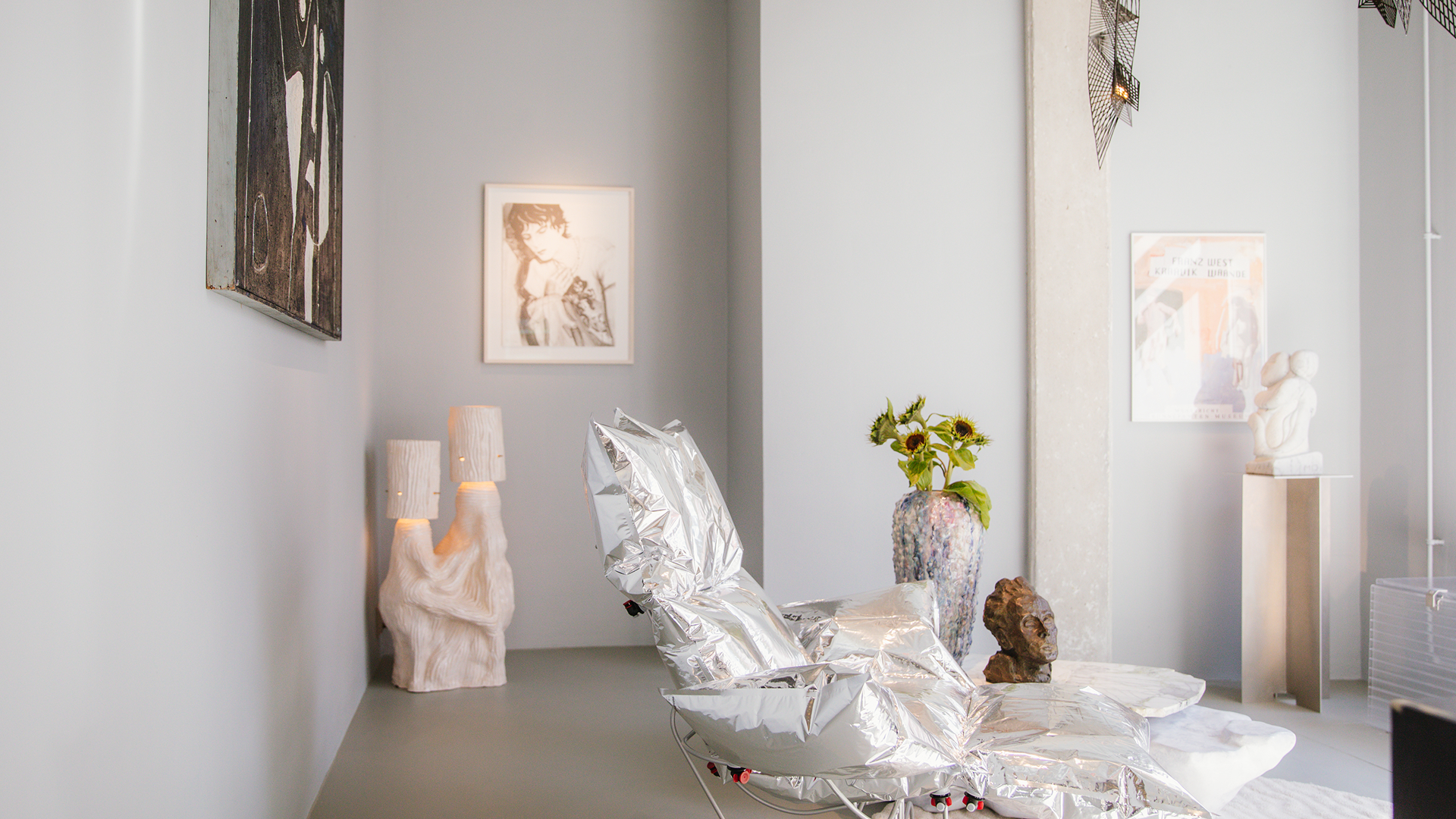

Inside The Millen House with Niek Schoenmakers
The distinction between a 'building' and a 'house' sits underneath everything Niek Schoenmakers built when he imagined The Millen House. It probably began much earlier, in the small castle near the German border where he grew up rifling through the earth for shards and old stones.
For his gallery, Niek never wanted 'a white cube with a front desk' and the polite distance that comes with it. He wanted somewhere you could wander into, sit down, ask questions and stay a while, the way you would in an actual living room.

Niek Schoenmakers has spent his career thinking exactly that way, first as an architect, now as the founder of The Millen House, which opened its new home in Amsterdam West on 25 June with an exhibition called PRESENT.
Arcatype readers may already recognise the name, The Millen House was part of the Edition 001, where one of its sculptural works anchored the room.
We sat down with Niek a few days before the doors opened, in the middle of the last stretch of admin and install, to talk about collecting, time, and what it means to turn a house into a place for other people's stories.
The Chair That Started It
Niek's version of how this all began doesn't start with architecture school. It starts with a thrift shop he used to pass on the way home, and a gift from his parents on his 16th birthday: a book called 1000Chairs. Inside it, he recognised a chair he'd just seen in a film, a piece by Vico Magistretti. Soon after, he tracked one down himself, and never really stopped collecting.
Architecture came later, and almost by accident. He'd been accepted into Design Academy Eindhoven, but was warned it would mean designing full-time, with little room for anything wider. So, he went looking for more context instead and landed on architecture, not because he wanted to design new objects, but because he wanted room to think bigger than a single object.
Industrial design, he says, is about giving a new interpretation to something that already exists, whether that's a chair or a vacuum cleaner. What pulled him toward architecture instead was the idea of working with what's already there: a building, a monument, and deciding how to move it forward without erasing it.
Curating Backwards, From the Story
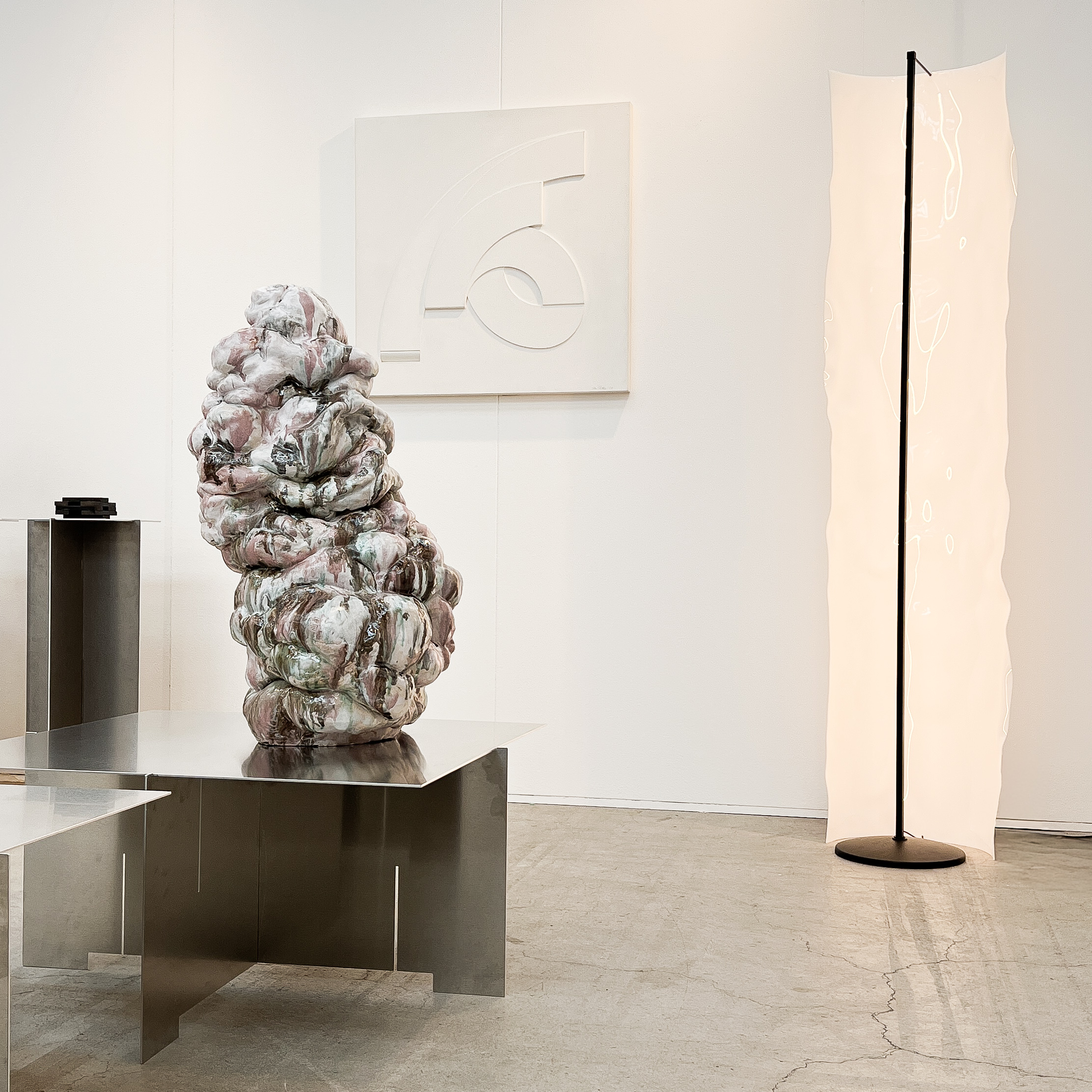
Ask Niek how he chooses what goes into a show, and he'll tell you it rarely starts with the object. It starts with an idea already forming in his head, and the pieces arrive afterward, as things that happen to belong to the same world.
"I have a story in my head, and then I'll find pieces that support it - that are in that same realm. And they all together create this story that I want to share with the world."
From there, it's about relevance, whether a piece still has something to say about the moment it's being shown in. He points to a wooden wall assemblage from the 1970s that he's shipping to a collector in Hungary this week: rough, discarded wood, reassembled rather than carved, in the spirit of Arte Povera, the Italian movement that turned ordinary, discarded materials into works of art. Shown now, he says, it reads differently - as a story about reuse, revaluation, about themes that happen to matter again today.
The same logic applies to the younger names in his roster: Leo Maher whose lighting explores identity and queerness, and Clara Schweers, who blends hand-blown glass with 3D-milled forms to blur the line between the digital and the handmade. Different eras but same test: does the piece carry something true about the time it was made in, and does it still carry something now?
What the Screen Can't Really Hold
We asked Niek how he thinks about the increasingly digital nature of running a gallery today. Much of his audience now first encounters the work through a screen, long before, if ever, they experience it in person.
Niek sells internationally, often to people he's never met face to face. He doesn't see that as a loss of connection. But he's clear about what a photo can't do.
"You can only take a photo, or a video, - you miss the mystery, the tangible quality of the piece. You miss the light changing. You miss the weight of things."
For Niek, the two aren't in competition. Digital tools make the work visible in ways that weren't possible before, but they don't replace the experience of standing in front of an object.
A House, Not a Gallery With a Name
The name itself is personal, pulled from Huis Millen, the castle where that collecting instinct started. Naming the gallery after it, rather than after himself, was deliberate.
"In the art world, the name is your brand. it's all about who you are. I wanted it to be different. It's not about me - it's about the stories I tell. I present my artists. That's who I want on the stage."
That instinct shaped the physical space too. When he found this new location in his own neighbourhood, his first thought was to gut it into one open white cube. Instead, he kept its small rooms, because they let him do what he'd always wanted: tell several stories under one roof.
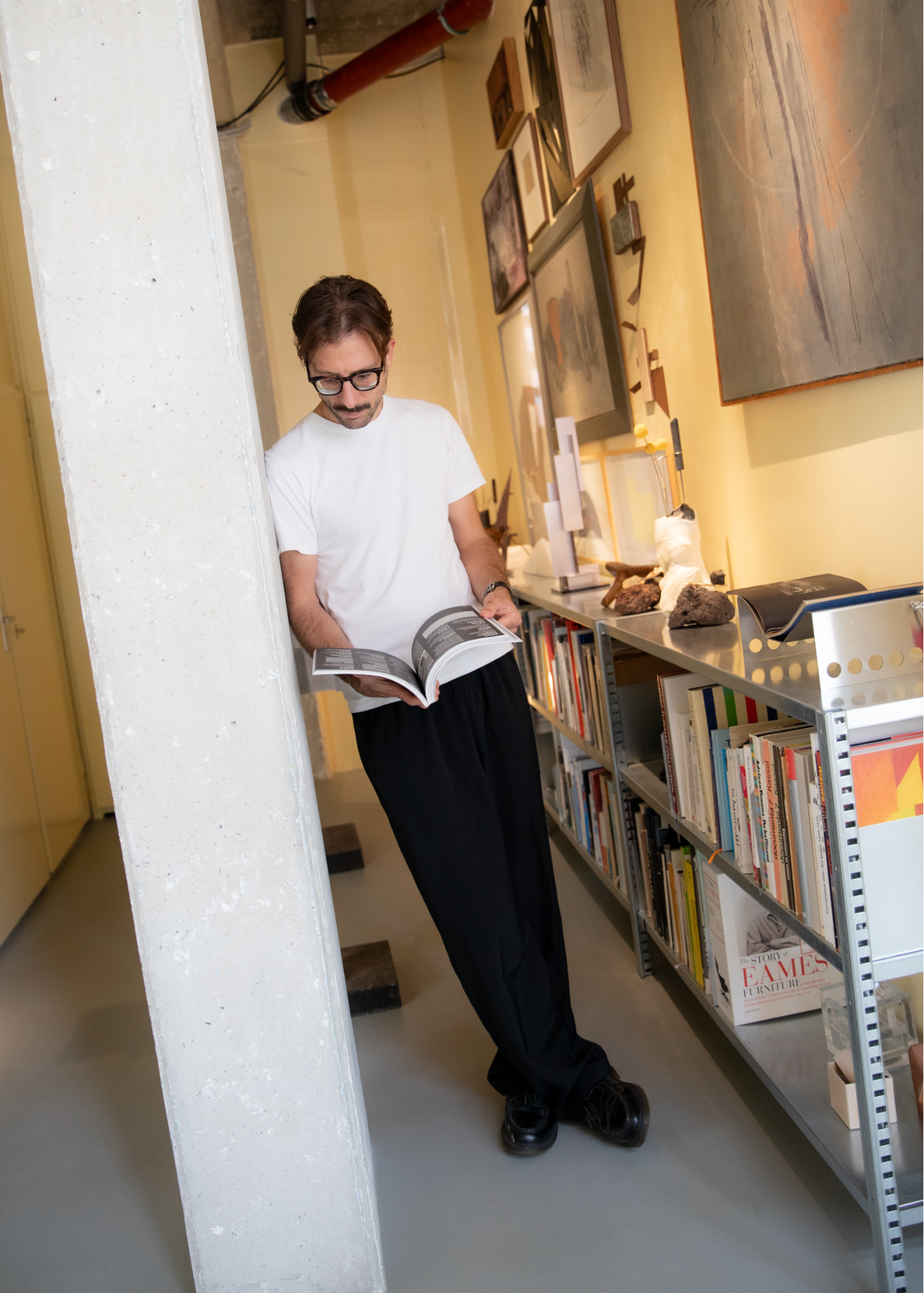
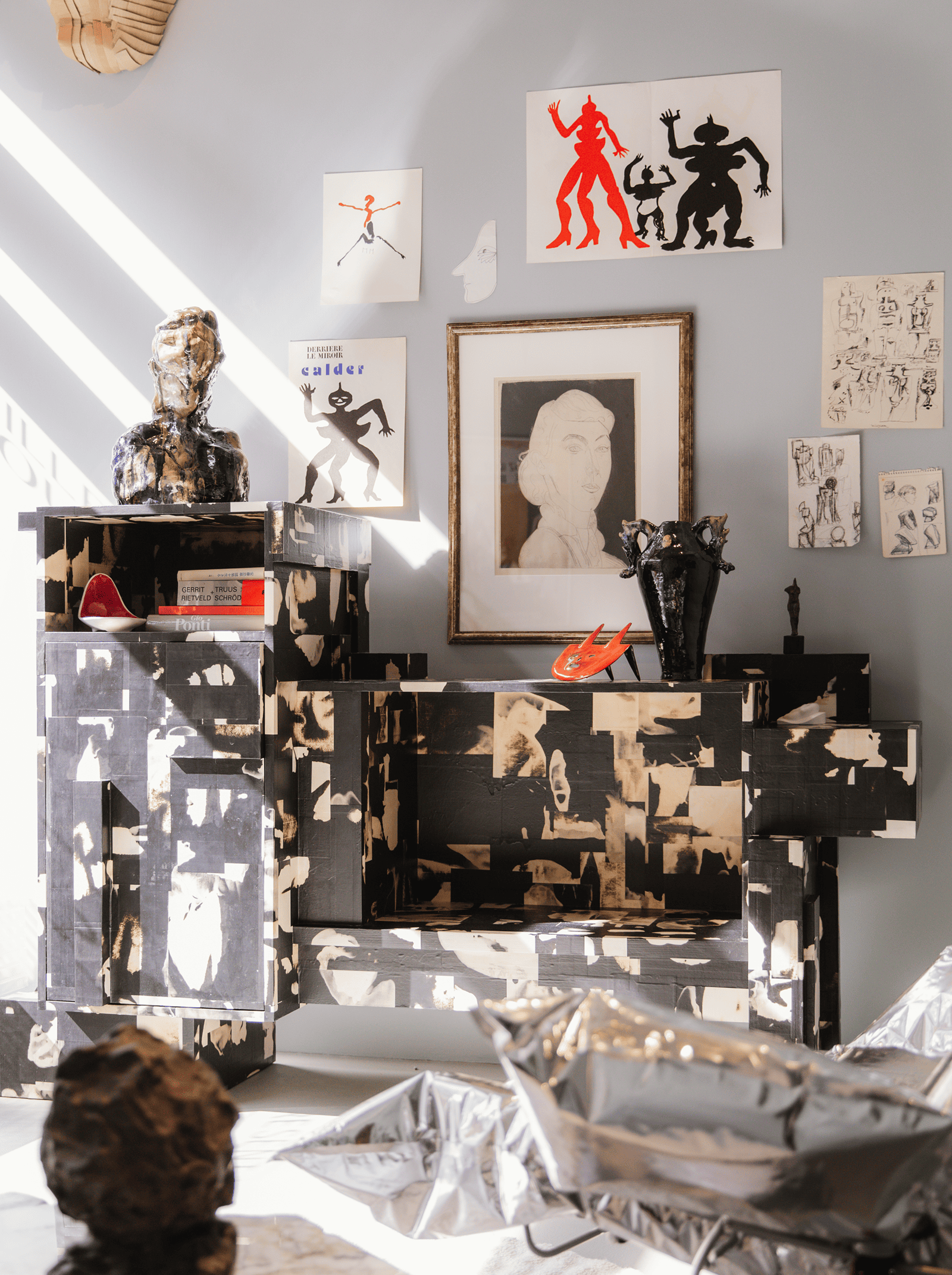
For the opening, that took the shape of three distinct spaces. A front room, which functions like a living room and reflects Niek's own maximalist instinct - objects layered together deliberately, so the friction between them creates meaning. A library, where his own collection of art, design, and books finally has room to live in the open, after years of staying half-hidden in storage. And a project room, handed over entirely to one artist under the gallery's ongoing HOUSEGUEST concept - this time, Rosa Shepherd, whose work explores movement through space and sits somewhere between sculpture and a piece of furniture built to be used. Her installation runs alongside PRESENT through 1 August.
Niek's only real instruction to her was that there wasn't one.
"If she wants to put something on the wall, that is fine. I don't need to be involved. It's such a rewarding idea, that I can give someone my space and just give them the trust."
A New Kind of Visible
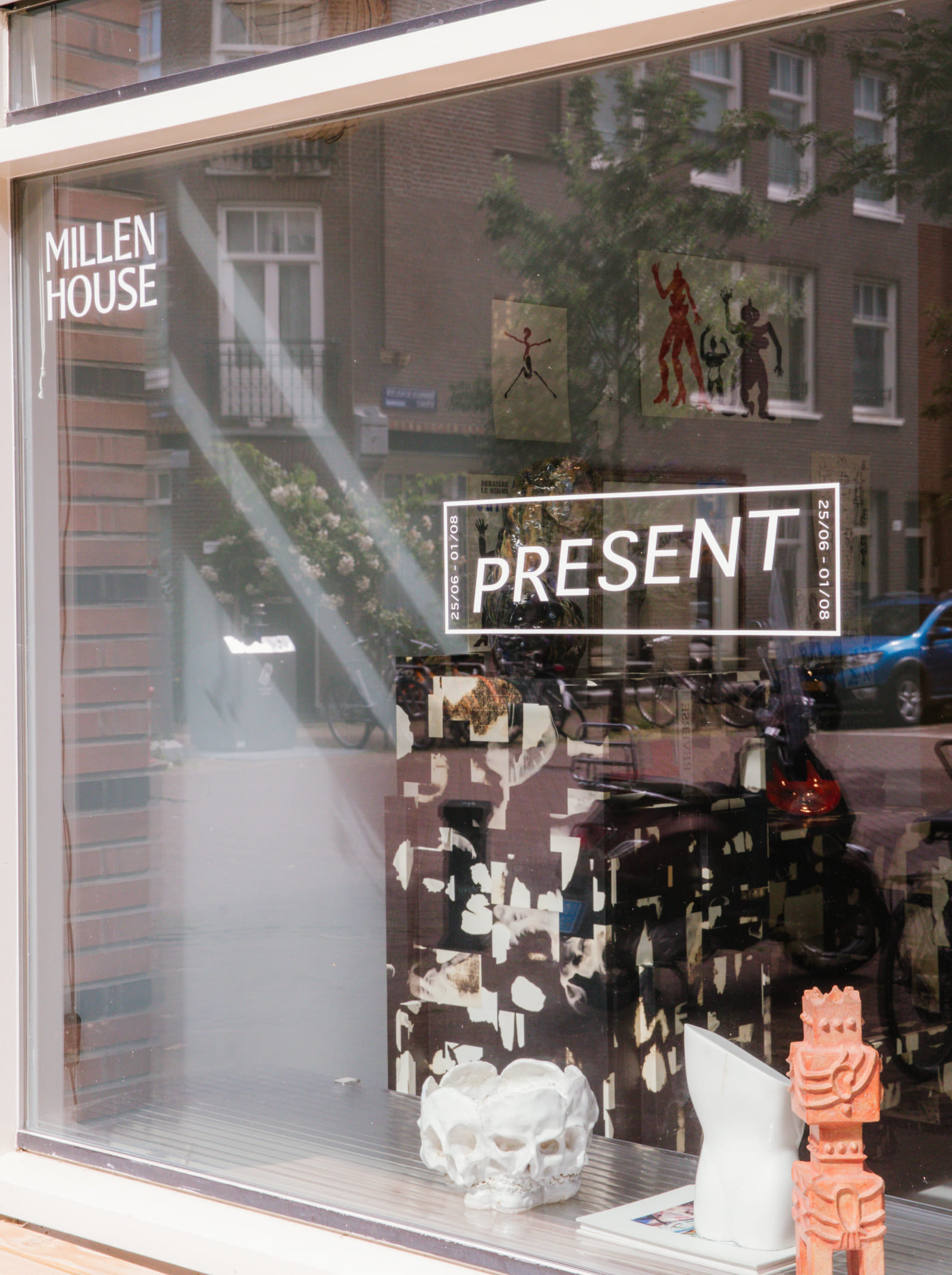
For years, Niek resisted the idea of a gallery with a shopfront at all. The traditional model felt too close to retail, waiting behind a desk to sell someone something. This space, with three windows facing directly onto the street, is a deliberate departure from that instinct. Neighbourhood kids have already started asking for tours :)
Putting a name in a window, he admits, is "slightly terrifying", but it's also, in his words, the space he's been picturing for years, long before his previous location ever existed.
PRESENT, on view at Fannius Scholtenstraat 89 through 1 August, a double meaning he'd had in mind from the start: his own presence, newly visible in a neighbourhood, and the presence of the body, the maker, the visitor, running through every piece in the room. Which might be the simplest way to describe what PRESENT is actually about - not the objects moving through the room, but the people who do.